Sony APS-C Crop Factor Explained: A Complete Expert Guide for Photographers

If you’ve ever researched Sony cameras—especially their Sony APS-C Crop Factor models—you’ve likely come across the term “crop factor.” For beginners, it can sound confusing or even intimidating. For experienced photographers, it’s a concept that directly impacts lens choice, framing, and creative control. Understanding the Sony APS-C crop factor is essential if you want to get the most out of your camera gear.
In this in-depth guide, we’ll break down the Sony APS-C crop factor in a simple, practical, and expert-level way. By the end, you’ll clearly understand what it is, how it affects your photos and videos, and why it’s actually an advantage in many shooting situations.
What Is the Sony APS-C Crop Factor?
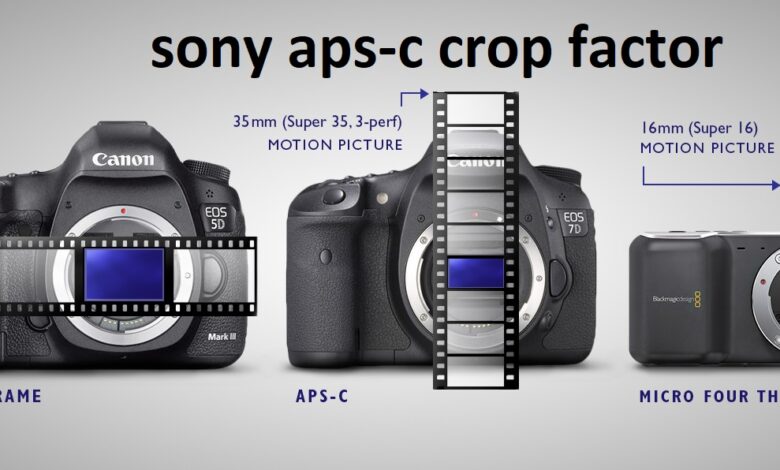
The Sony APS-C crop factor refers to how much smaller the APS-C sensor is compared to a full-frame sensor. Sony APS-C cameras have a crop factor of 1.5x, meaning the sensor captures a smaller portion of the image projected by the lens. This doesn’t physically change the lens, but it changes how the image looks in terms of framing.
To put it simply, a crop factor “crops” the field of view. If you mount a lens designed for full-frame cameras onto a Sony APS-C body, the image will appear more zoomed in. A 50mm lens on an APS-C camera will give you a field of view similar to a 75mm lens on a full-frame camera.
This concept often confuses new photographers because the focal length printed on the lens never changes. The crop factor only affects how much of the scene the sensor records. Once you understand this difference, the idea becomes much easier to grasp.
Sony’s APS-C cameras, such as the Alpha a6000 series, are popular because they strike a great balance between performance, size, and affordability. The 1.5x crop factor is a key part of why these cameras perform so well in specific photography genres.
How Sony APS-C Crop Factor Affects Field of View
Field of view is where the crop factor becomes most noticeable. With Sony APS-C cameras, you get a tighter composition compared to full-frame cameras using the same lens. This can be either a benefit or a limitation, depending on your shooting style.
For example, if you’re shooting wildlife or sports, the crop factor works in your favor. A 200mm lens effectively behaves like a 300mm lens in terms of framing. This extra “reach” allows you to get closer to distant subjects without buying expensive super-telephoto lenses.
On the other hand, wide-angle photography can be more challenging. A 16mm lens on APS-C behaves like a 24mm equivalent on full-frame. This means ultra-wide landscapes or architecture shots require specially designed wide-angle APS-C lenses to maintain that expansive look.
Understanding field of view is critical when choosing lenses. Once you start thinking in “full-frame equivalent” terms, planning your shots and building a lens kit becomes far more intuitive.
Crop Factor vs. Image Quality: Clearing the Myths
One of the biggest misconceptions about the Sony APS-C crop factor is that it reduces image quality. In reality, crop factor has nothing to do with image sharpness or sensor resolution. It simply affects how much of the lens’s image circle is used.
Modern Sony APS-C sensors are incredibly advanced. Cameras like the Sony a6700 or a6400 deliver excellent dynamic range, low-light performance, and color science. The difference between APS-C and full-frame is more about sensor size than raw quality.
That said, sensor size does influence depth of field and low-light performance. Full-frame sensors generally perform better in extremely low-light situations and produce shallower depth of field. However, Sony’s APS-C cameras compensate with fast lenses and excellent ISO handling.
For most real-world photography—especially web use, social media, and even professional work—the image quality difference is minimal. The crop factor should be viewed as a creative tool, not a technical limitation.
Sony APS-C Crop Factor and Lens Compatibility

Sony APS-C Crop Factor is one of its biggest strengths. Both APS-C and full-frame cameras use the same mount, which means you can use full-frame (FE) lenses on APS-C bodies without any adapters. The crop factor automatically applies.
When you use an FE lens on a Sony APS-C camera, only the center portion of the lens’s image is used. This often results in sharper images because you’re using the “sweet spot” of the lens, avoiding softer edges.
Sony also offers dedicated APS-C lenses, which are smaller, lighter, and more affordable. These lenses are designed specifically for the 1.5x crop sensor and provide the intended field of view without unnecessary bulk.
This flexibility makes Sony APS-C cameras ideal for photographers who plan to upgrade to full-frame later. You can invest in FE lenses now and continue using them seamlessly in the future.
Impact of Crop Factor on Depth of Field
Depth of field is another area where the Sony APS-C crop factor plays a role. Compared to full-frame cameras, APS-C sensors produce a deeper depth of field at the same aperture and framing. This means more of the scene stays in focus.
For genres like street photography, travel, and documentary work, this can be a big advantage. You can keep more of your subject sharp without stopping down too much, which helps in low-light conditions.
However, if you’re aiming for extremely blurred backgrounds, APS-C requires faster lenses or longer focal lengths to achieve the same effect as full-frame. Sony’s wide selection of fast primes, such as f/1.8 lenses, helps bridge this gap.
Ultimately, depth of field differences are subtle and manageable. With proper lens choice and technique, Sony APS-C cameras can produce beautiful background separation.
Video Performance and the Sony APS-C Crop Factor
For videographers, the Sony APS-C crop factor is often seen as a strength rather than a drawback. The tighter field of view helps with stabilization, telephoto shots, and controlled framing.
Many Sony APS-C cameras offer advanced video features like 4K recording, high frame rates, and excellent autofocus. The crop factor allows filmmakers to get more reach without additional gear, which is especially useful for run-and-gun shooting.
However, wide-angle video shooters need to plan carefully. Vlogging or interior shots may require ultra-wide APS-C lenses to maintain a natural perspective. Thankfully, Sony and third-party manufacturers offer plenty of wide options.
In professional video workflows, APS-C sensors are widely accepted. The crop factor becomes just another creative choice rather than a technical compromise.
Why Sony APS-C Crop Factor Is Ideal for Beginners
For beginners, the Sony APS-C crop factor offers a forgiving learning curve. The extra depth of field makes it easier to keep subjects in focus, while the effective focal length helps with composition.
APS-C cameras are also smaller and lighter, making them less intimidating and more portable. This encourages frequent shooting, which is the fastest way to improve photography skills.
Sony’s autofocus systems, paired with APS-C sensors, are among the best in the industry. Eye AF, subject tracking, and fast burst rates make these cameras incredibly user-friendly.
When paired with the right lenses, APS-C cameras can handle almost any genre—from portraits and landscapes to wildlife and sports—making them an excellent starting point.
APS-C vs Full-Frame: Making the Right Choice
Choosing between Sony APS-C and full-frame cameras depends on your priorities. APS-C offers affordability, portability, and effective reach, while full-frame provides maximum sensor performance and shallow depth of field.
The crop factor should not be viewed as a downgrade. Many professionals use APS-C cameras daily because they suit their workflow better. In fact, Sony’s APS-C lineup is often praised for delivering exceptional value.
If you shoot travel, wildlife, street photography, or video, the APS-C crop factor can actually enhance your results. Understanding how it works allows you to use it creatively instead of fighting against it.
In the end, the best camera is the one that fits your shooting style—and Sony APS-C cameras do that exceptionally well for a wide range of photographers.
Final Thoughts on Sony APS-C Crop Factor
The Sony APS-C crop factor of 1.5x is not something to fear or overthink. It’s simply a characteristic of the sensor that influences framing, depth of field, and lens behavior. Once you understand it, it becomes an advantage rather than a limitation.
Sony has built an ecosystem where APS-C cameras shine alongside full-frame models. With excellent autofocus, strong video features, and a massive lens selection, APS-C cameras continue to be a smart and future-proof choice.
Whether you’re a beginner stepping into photography or an experienced shooter looking for a lightweight, powerful setup, mastering the Sony APS-C crop factor will help you shoot with confidence and creativity.